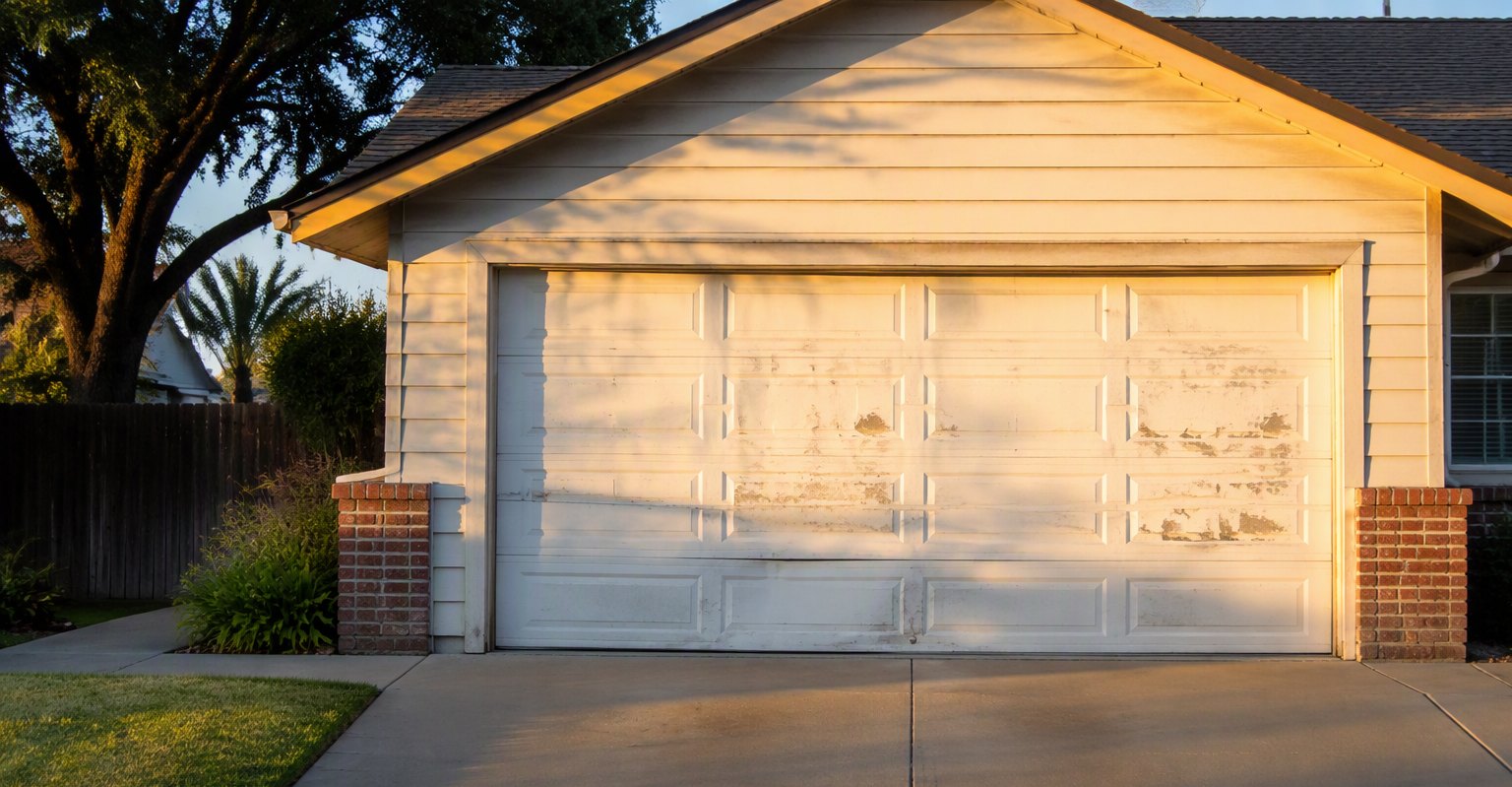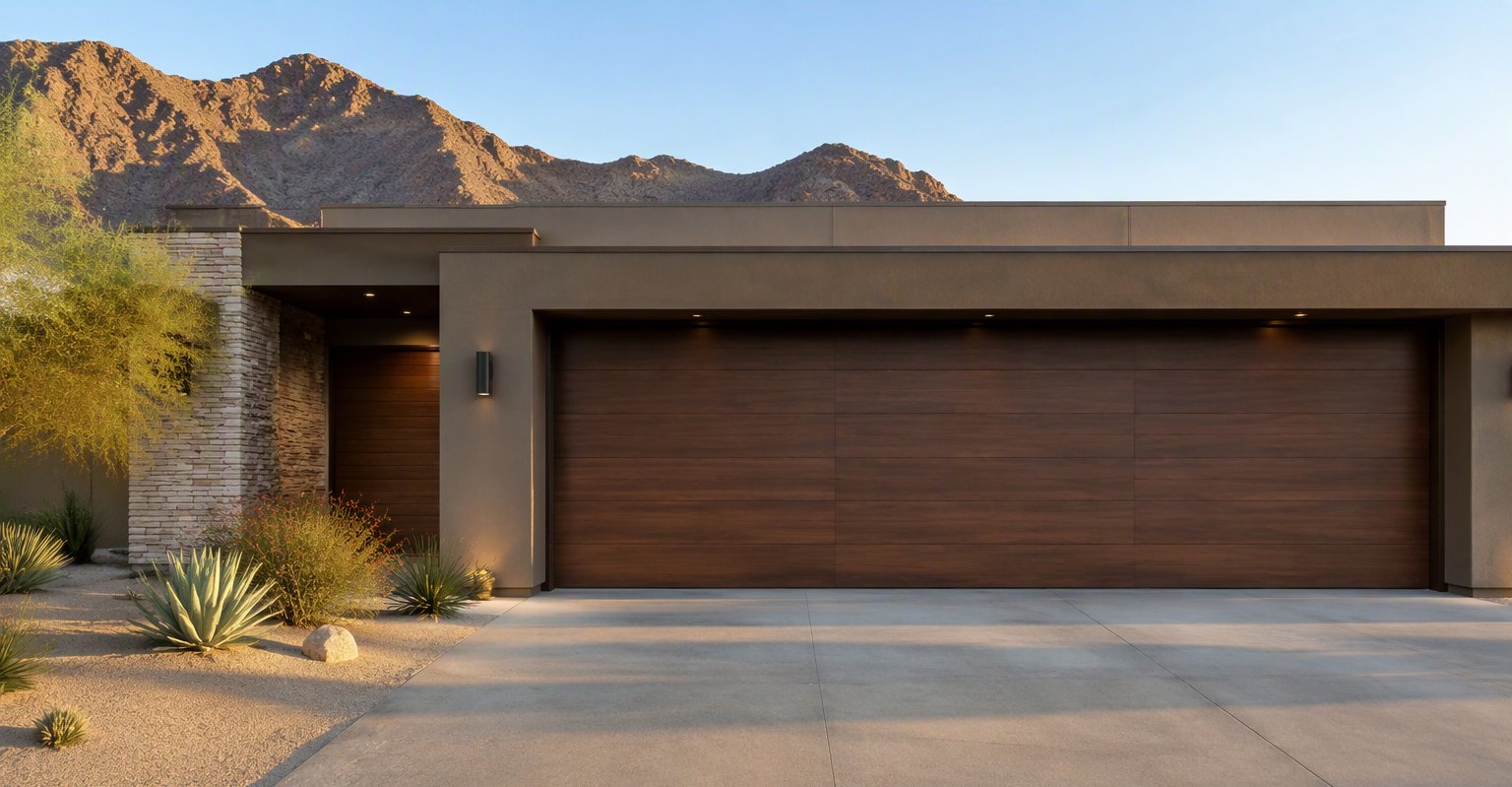
A garage door in Riverside faces a climate test most catalogs ignore: garage interiors over 130 degrees, UV that chalks finishes in a few summers, dust that works into every seam, and wind that loads the panels every fall. The material you choose decides whether the door shrugs that off or ages in dog years.
Steel: the valley default, spec’d properly
Steel earns its dominance here — dimensionally stable in heat, unbothered by dust, and available insulated. The details matter: single-layer builder steel dents if you look at it and turns the garage into an oven; a three-layer insulated sandwich door (steel-foam-steel) drops garage temps twenty degrees, runs quieter, and holds its shape for decades. Woodgrain-embossed finishes give the warmth of wood without wood’s maintenance calendar. For most valley homes, insulated steel is the correct answer.
Real wood: beautiful, and a commitment
Nothing matches real wood on a heritage home — and nothing demands more. In this climate, wood needs sealing on a schedule, and west-facing doors will still fade and check over time. The honest math: choose wood for the streets where it belongs (Redlands’ historic districts know why), and budget the upkeep, or choose a wood-look composite and visit it only to wash it.
Glass and aluminum: the modern statement
Full-view doors — black anodized frames with frosted or tinted glass — are the defining look on contemporary valley builds, and they perform better here than their reputation suggests: the frames don’t warp, the glass doesn’t care about UV, and frosted panels glow at dusk instead of radiating glare. The trade-offs are insulation (better than you’d think with insulated glass, less than a foam sandwich) and privacy (frosted solves it). On the right house, nothing else comes close.
Composite and fiberglass: the quiet contender
Composite overlays on steel cores deliver the wood look with none of the swelling, cracking, or sealing schedule. Quality varies by maker — the good lines fool the street from five feet away and hold their finish through years of Augusts. For homeowners who want warmth without maintenance, this is where we start the samples.
What we actually recommend
Match the material to the house and the exposure: insulated steel for most, full-view glass for the contemporaries, composite for wood looks in full sun, real wood where the architecture earns it. Then spec high-cycle hardware regardless — the panels may outlive the springs either way, but only one of those is designed to be replaced. The install process is on the installation page.