Every garage door reaches the fork: keep fixing it, or retire it. The industry default answer is “replace” — it’s the bigger ticket. The honest answer depends on four questions, and two of them favor repair more often than you’d expect.
Question one: what’s actually failing?
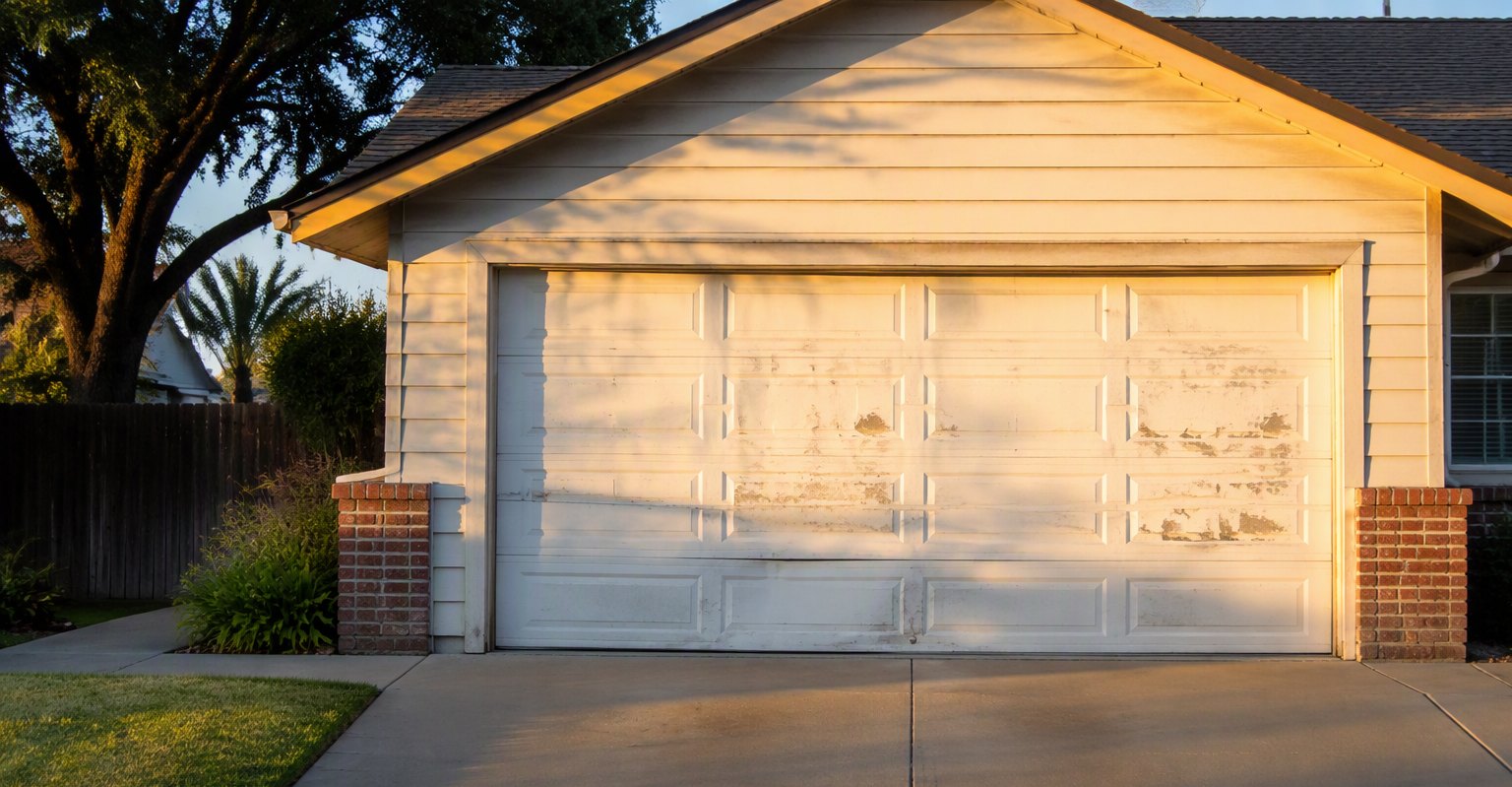
Mechanical failures — springs, cables, rollers, sensors, opener components — are repairs, full stop. They’re wear items, designed to be replaced, and a door with a dead spring is a healthy door having a bad day. Structural failures — cracked stiles, rotted rails, delaminating panels, a frame that’s stopped being square — are the door itself expiring. Repair the mechanical; think hard about the structural.
Question two: how old is the door?
Under fifteen years with sound panels: repair almost always wins. Past twenty, parts availability starts thinning and every repair is a bet on the next component. The worst spot is a discontinued model — when a single replacement panel becomes a scavenger hunt, the math quietly flips to replacement.
Question three: what is it costing you in August?
An uninsulated single-layer door turns the garage into a 130-degree radiator leaning on the house’s shared wall. If the garage bakes and the laundry room or bedroom beside it pays the price, an insulated replacement isn’t cosmetic — it’s the energy upgrade you feel every summer afternoon. A repair can’t add insulation to a door that never had it.
Question four: what is the door saying about the house?
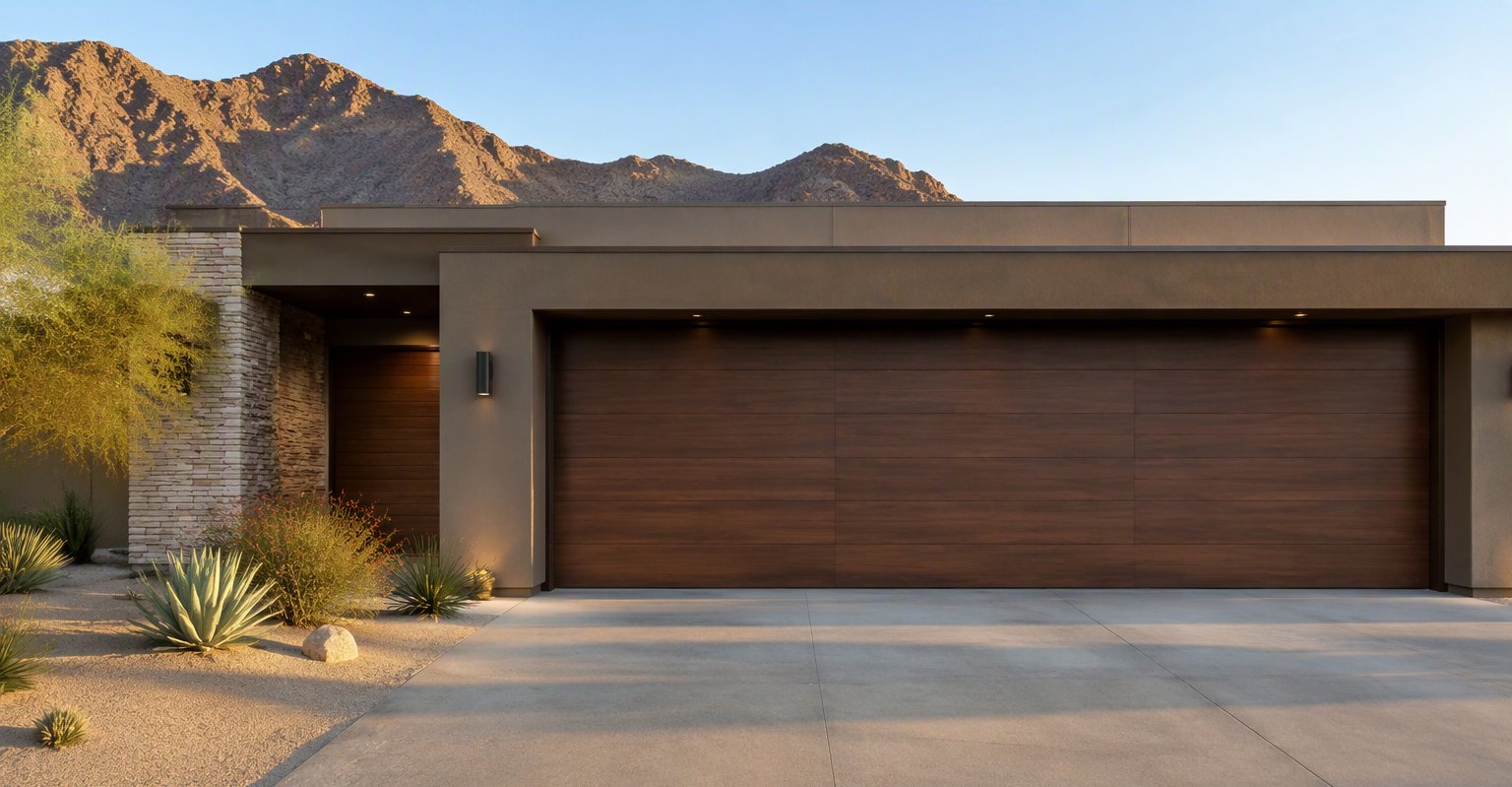
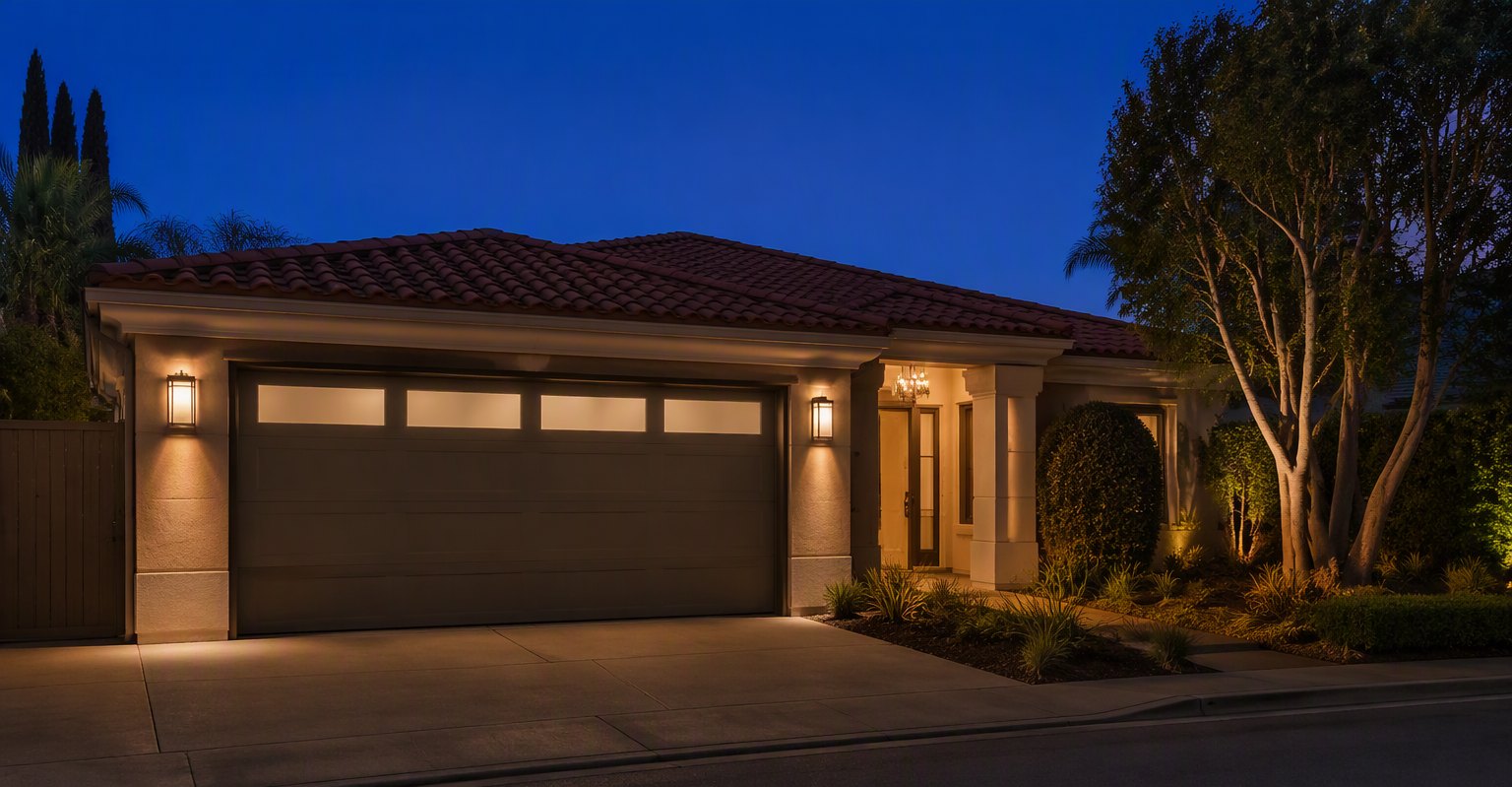
The garage door can be a third of the front elevation. A chalky, dented, dated door drags the whole street view down; a door that suits the architecture lifts it more than paint or landscaping ever will. If you’re already repairing and the door is the house’s weakest visual link, the incremental spend to replacement often returns the strongest curb-appeal change per dollar on the property.
How we handle the fork
On every service call where replacement is a live question, you see both numbers — the repair total and the replacement total, written — with the reasoning behind each. Plenty of our repair visits end with a repaired door and our recommendation to keep it. Plenty of our consultations end with a honest “stop spending on this one.” The installation page covers what replacement day looks like; the panel page covers the middle path nobody quotes you.