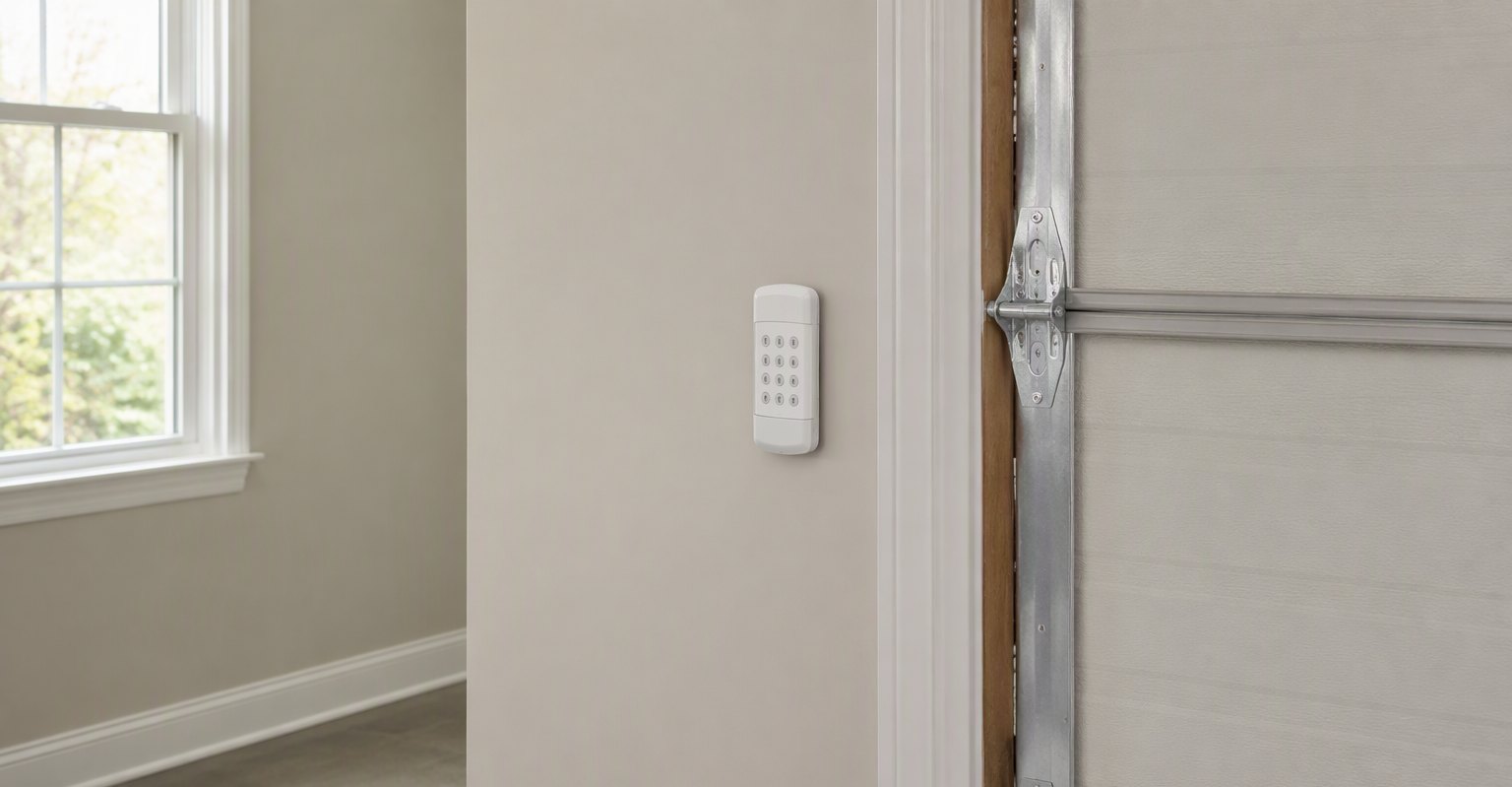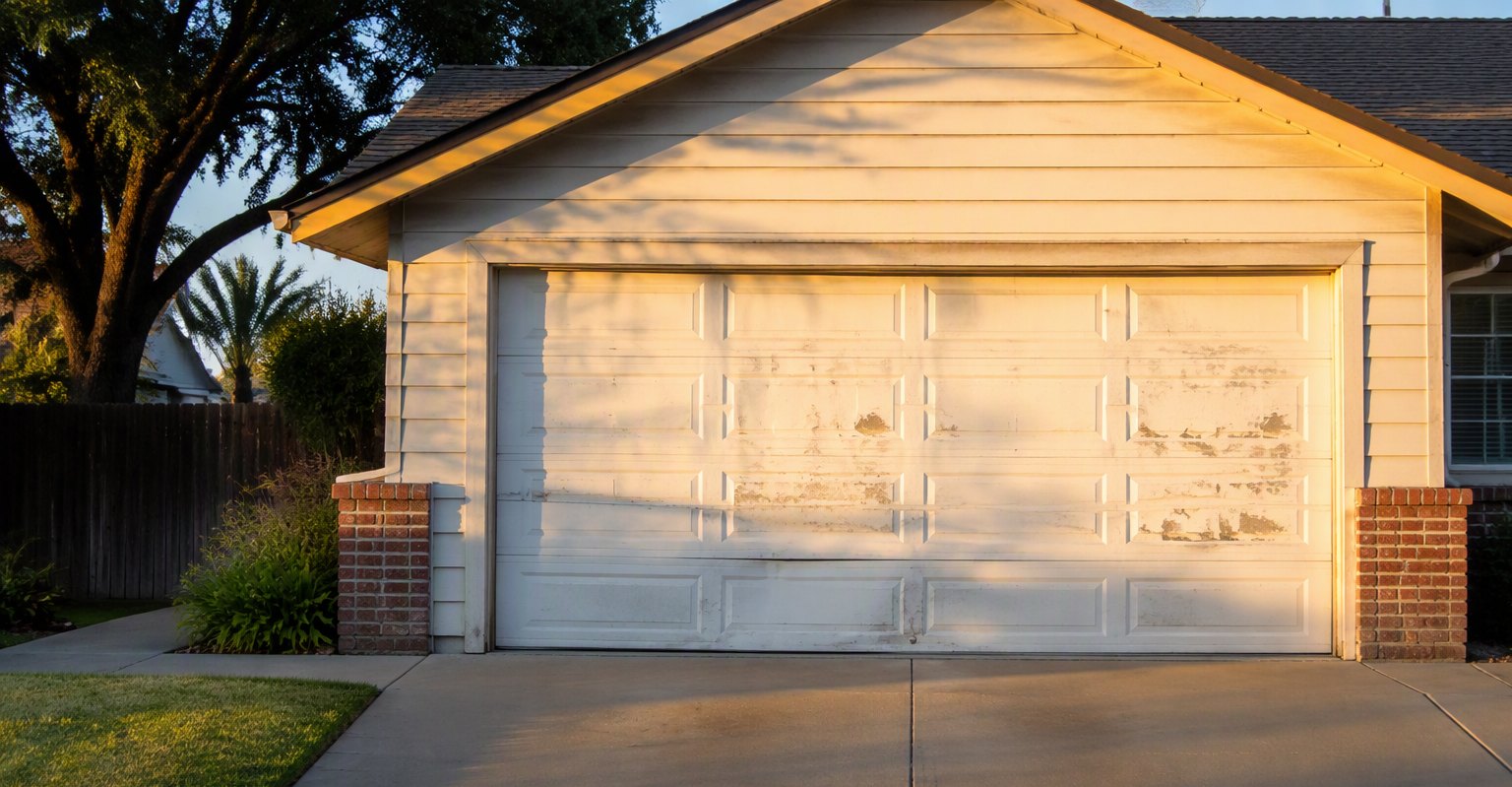
The garage door is the biggest movable opening in the house — and in too many valley homes it’s guarded by the oldest technology on the property. The good news: the real fixes are mechanical, affordable, and mostly about knowing where the gaps actually are.
The coat-hanger problem
The emergency release — that red cord — exists so you can open the door in a power outage. On many setups, a hooked wire through the top of the door can snag it from outside in seconds. The fix isn’t removing the release (you want it in an emergency); it’s shielding it — a release shield or proper repositioning keeps the cord reachable from inside and invisible from outside. It’s a small part that closes the oldest trick in the book.
The opener generation gap
Openers made before rolling codes became standard transmit a fixed code that can be captured and replayed. Modern openers generate a new code every press. If your unit predates that — or lacks a vacation mode that disables remotes entirely while you’re away — the ceiling unit is the gap. Battery backup, motion lighting, and phone alerts when the door opens are the bonus features that come along with a modern unit.
The door nobody thinks about
The door between the garage and the house is an exterior door — treat it like one: solid core, deadbolt, and self-closing hinges. A garage that’s occasionally left open for “just a minute” (the most common gap of all) turns that door into the last line. While you’re at it: the service door to the side yard deserves the same hardware as the front door, and a garage left open all afternoon advertises exactly what’s inside to every passing car.
The five-minute audit
- Release shield on the emergency cord — reachable from inside, invisible from outside.
- Rolling-code opener with vacation mode for trips.
- Deadbolted, self-closing garage-to-house door.
- A door that closes fully — a bottom seal gap you can slip fingers under is a pry point. If yours doesn’t seal tight, that’s a service call, and it’s a small one: the repair page covers it.